
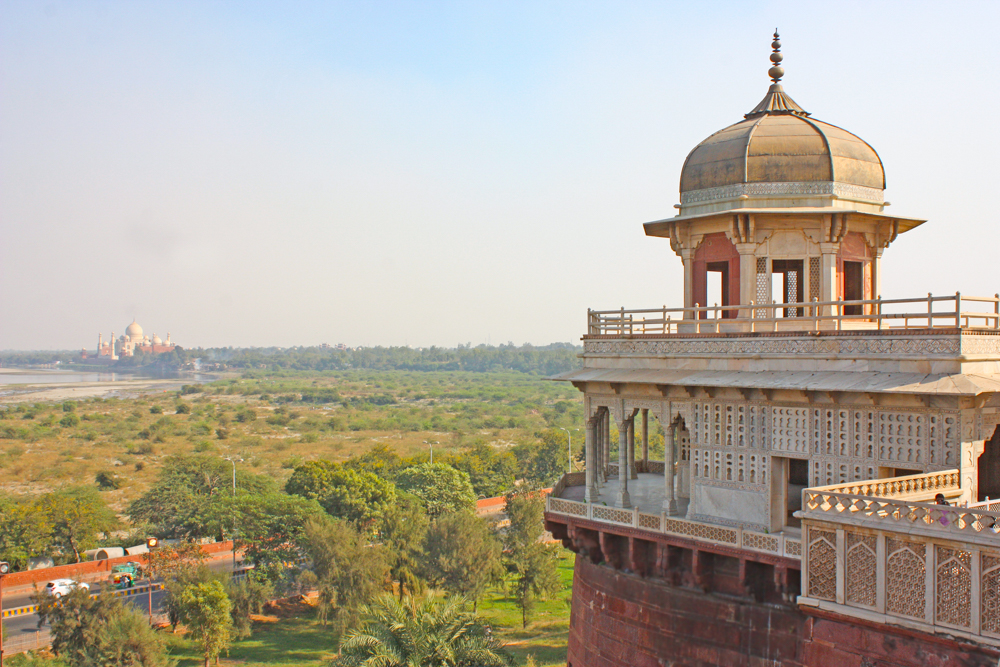
This travel guide covers the best places to visit in Agra in one day in 2026. Agra is a city I have a complicated relationship with. On one hand, it is home to some of the most extraordinary historical monuments in India. On the other, it is one of the busiest and most chaotic cities on the Golden Triangle route. The good news is that it is absolutely possible to explore all the major places to visit in Agra in just one day.
I have visited the Taj Mahal three times so far, and every single visit has left me speechless. The Taj Mahal alone makes dealing with the madness of Agra worthwhile. That said, Agra is far more than just the Taj Mahal. The city has several fascinating monuments that fit perfectly into a well planned one day Agra itinerary.
Agra in One Day
During my very first trip to India in 2007, I nearly skipped Agra altogether. I fell seriously ill in the nearby town of Fatehpur Sikri after weeks of constant travel. My stomach finally gave in after battling Indian bacteria for almost three weeks. I stayed in a charming guesthouse where I spent two days resting while the caring staff brought me fresh rotis and herbal tea.
What was supposed to be a one night stay turned into nearly a week. The children from the neighborhood showed me their local madrassa and invited me into their homes for tea. Their kindness was overwhelming, and leaving felt surprisingly difficult.
Eventually, if I wanted to continue my journey toward Varanasi and Nepal, I had to move on. Even then, I still resisted visiting Agra. Everything inside me wanted to avoid such a hectic city. But the next day happened to be my birthday, and seeing the Taj Mahal on my twenty fifth birthday felt too special to miss.
I took a bus to Agra and hired a tuk tuk to explore all the major attractions in a single day. Looking back, it was the best decision I could have made. While the monuments are breathtaking, the rest of the city itself does not offer much charm.
Over the years, I returned to Agra twice more. The Taj Mahal never loses its magic. Although I never stayed longer than a day in the city, I did discover several fascinating places to visit near Agra, including Fatehpur Sikri and Mathura.
In this guide, I will share the most important places to visit in Agra in one day, along with suggestions for nearby destinations if you have extra time.
Places to Visit in Agra in One Day
Taj Mahal
The Taj Mahal is widely regarded as the most beautiful mausoleum in the world and stands as a timeless symbol of love. It was commissioned by the Mughal emperor Shah Jahan in memory of his wife Mumtaz Mahal. Though their marriage was arranged when they were young, their bond grew strong over time. Mumtaz Mahal passed away in 1631 while giving birth to their fourteenth child.
Her final wish was the construction of a grand mausoleum in Agra. The project nearly drained the imperial treasury and even caused famines in surrounding regions as food supplies were redirected to feed the workforce of around twenty thousand laborers.
Built entirely of white marble, the Taj Mahal is famous for its intricate pietra dura inlay work, where semi precious stones form delicate floral and geometric patterns. While it is an absolute must visit, it is also one of the most crowded tourist attractions in India, drawing more than seven million visitors each year.
The gardens provide enough space to escape the crowds, but expect long queues to enter the inner tomb chamber. The marble cenotaphs visible inside are symbolic, as the actual tombs lie in a lower chamber.
Insider tip: The best reason to stay overnight in Agra is to visit the Taj Mahal at sunrise. The monument opens at six in the morning and glows softly with pink hues during the early hours. It is quieter and far more peaceful at this time. Sunset is another beautiful moment, especially when viewed from a boat on the Yamuna River, offering stunning views without the intense crowds.
Agra Fort
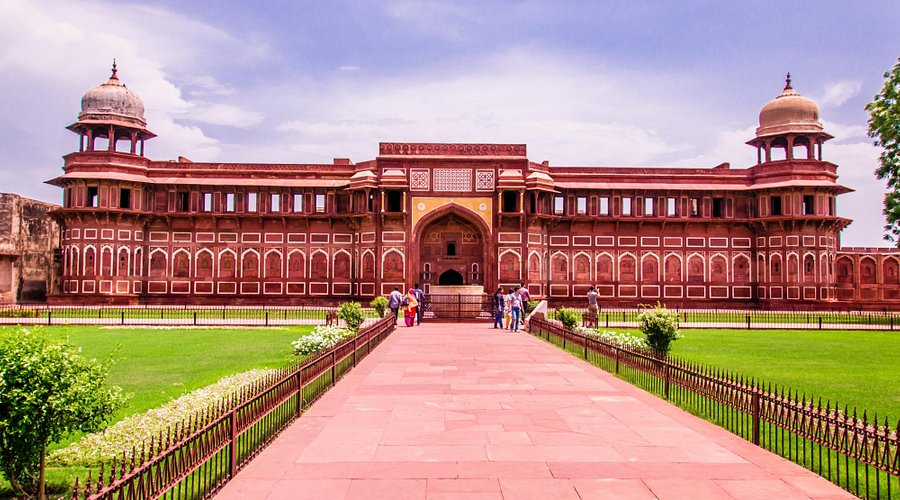
Agra Fort once served as the main residence of the earliest Mughal emperors before the capital shifted to Delhi. If you have already visited the Red Fort in Delhi, you may notice many similarities, as both functioned like fortified cities within cities.
Construction began in 1565 under Emperor Akbar on the site of an older fort built by the Lodi dynasty. Initially designed as a military stronghold, the fort protected the Mughal capital from invasions. Inside, you will find impressive structures such as Jahangiri Mahal, Khas Mahal, Diwan i Khas, and Diwan i Am.
Shah Jahan later expanded the fort significantly. His contributions include the elegant Moti Masjid or Pearl Mosque, the Sheesh Mahal, and the Musamman Burj.
One of the most dramatic chapters in the fort’s history occurred when Shah Jahan was imprisoned here by his son Aurangzeb after being overthrown in 1658. During British rule, the fort served as a military and administrative center.
Personally, I enjoyed Agra Fort even more than Delhi’s Red Fort. It easily ranks among the top places to visit in Agra in one day.
Baby Taj
The Tomb of Itimad ud Daulah is often referred to as the Baby Taj. Interestingly, it predates the Taj Mahal and may have inspired its design. It is one of the earliest examples of pietra dura inlay using precious stones.
The tomb was built in the early seventeenth century by Nur Jahan, wife of Emperor Jahangir, in memory of her father Mirza Ghiyas Beg. A Persian nobleman, he rose to prominence in the Mughal court and earned the title Itimad ud Daulah meaning pillar of the state.
After his death in 1622, Nur Jahan commissioned a marble mausoleum on the banks of the Yamuna River. Influenced by Persian architecture, the structure features exquisite inlay work, delicate carvings, and beautiful floral motifs.
Although smaller than the Taj Mahal, I personally found the Baby Taj even more charming. The absence of crowds allows you to admire the details closely. Inside, you will find intricate patterns of flowers, vases, and trees. While the Taj Mahal impresses through grandeur, the Baby Taj captivates through elegance and detail.
Jama Masjid
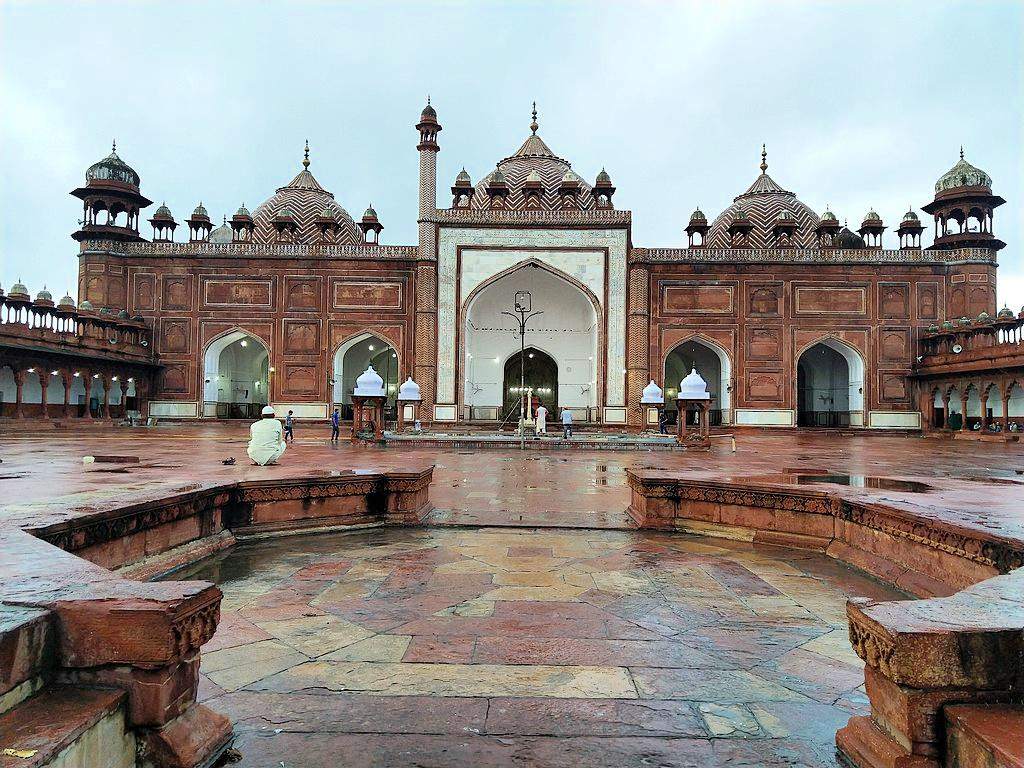
The Jama Masjid of Agra is another architectural masterpiece built during the reign of Shah Jahan. Constructed using red sandstone and decorated with white marble, it closely resembles the Friday mosques found in Delhi and Fatehpur Sikri.
It is one of the largest mosques in India and can accommodate thousands of worshippers at once. The vast courtyard is surrounded by arched cloisters, domes, and towering minarets. Three grand gateways lead into the mosque, each adorned with intricate calligraphy and decorative patterns.
Built during the height of the Mughal Empire, the mosque served both as a place of worship and a powerful symbol of imperial wealth and authority.
Sadar Bazaar
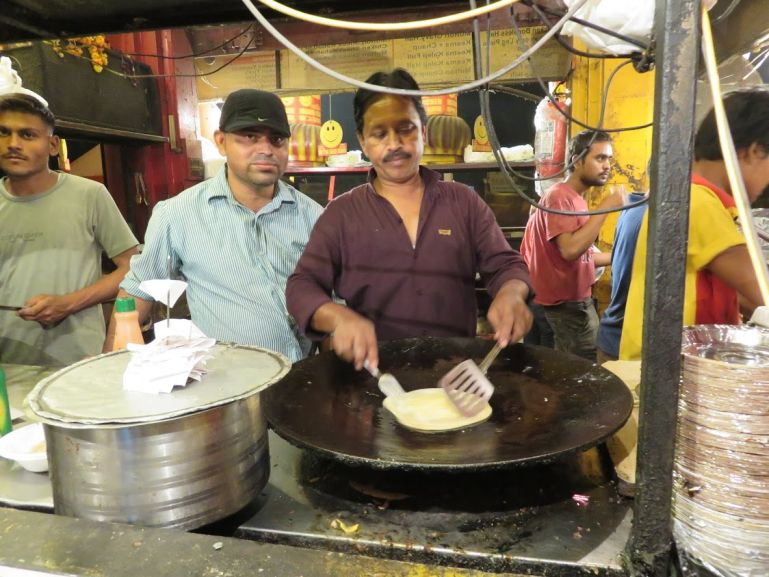
If you still have some time left in your Agra one day itinerary, a visit to Sadar Bazaar is worthwhile. This area feels far less touristy and offers a more authentic shopping experience. While it may not be as colorful as markets in Jaipur or Delhi, you can still find lovely souvenirs here.
For dinner, head to Mama Frankie House, known for serving some of the best chicken kebabs with naan in Agra.
Places to Visit Near Agra
Although all the major attractions can be covered in one day, there are several interesting places near Agra that are worth visiting if you have extra time. Each of these destinations makes for an easy day trip or an alternative base.
Fatehpur Sikri
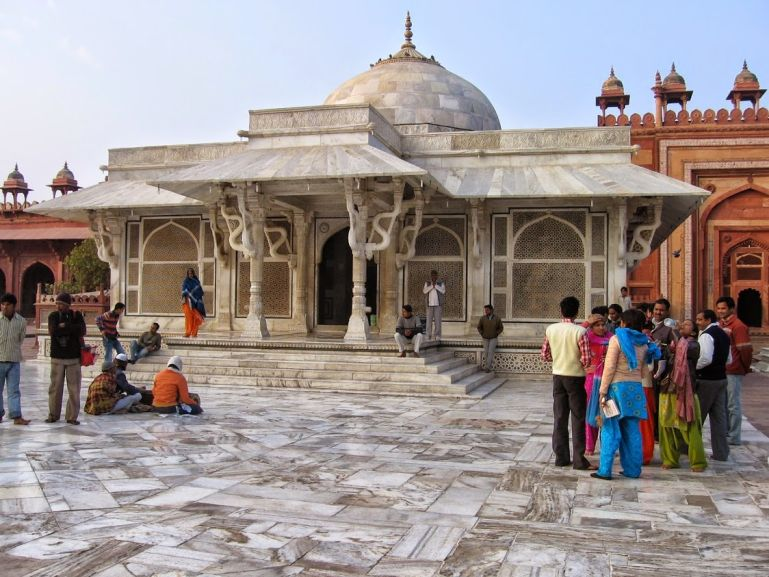
Most travelers visit Fatehpur Sikri as a day trip from Agra, but I experienced it the other way around. I am not much of a city person, and I loved the calm village atmosphere here. Watching sunsets from my guesthouse rooftop while recovering from illness remains a cherished memory.
Once the capital of the Mughal Empire, Fatehpur Sikri was founded by Akbar in 1571. The city held great spiritual importance, as the Sufi saint Salim Chisti predicted the birth of Akbar’s son Jahangir here. Despite its grandeur, the capital was abandoned just fourteen years later due to water shortages.
Highlights include Akbar’s palace, the Jama Masjid, the towering Buland Darwaza, and the tomb of Salim Chisti, which remains an active pilgrimage site.
Sikandra
Located just ten kilometers from Agra, Sikandra is home to the tomb of Akbar the Great. Though not massive in size, the tomb is rich in decorative detail and represents a beautiful blend of Mughal architectural styles.
Mathura and Vrindavan
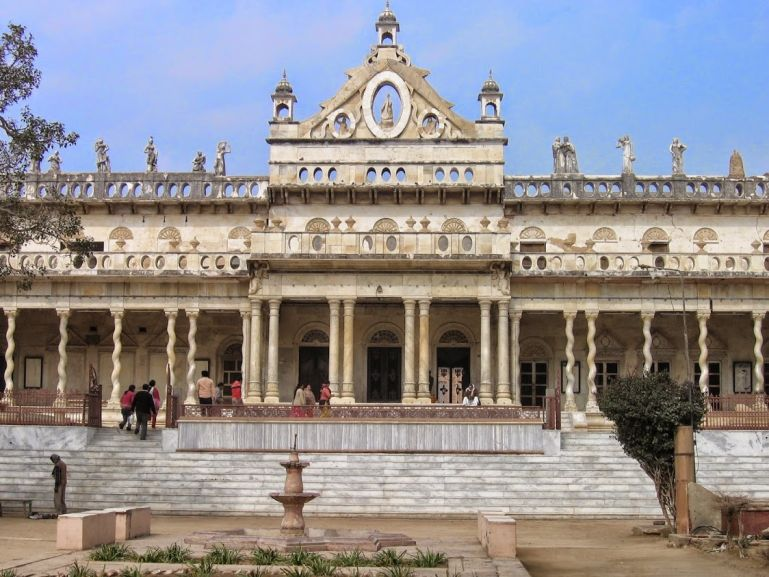
Mathura, believed to be the birthplace of Lord Krishna, is one of the seven sacred cities of India. It is filled with temples and ghats along the Yamuna River, somewhat reminiscent of Varanasi.
Nearby Vrindavan is equally significant in Krishna’s life story. Today, it also serves as a refuge for widows seeking spiritual solace. With over five thousand temples, the best way to experience these towns is by wandering through their narrow lanes and riverside ghats.
Bharatpur
Nature lovers should consider a visit to Bharatpur, home to the Keoladeo National Park. This UNESCO listed bird sanctuary is a crucial habitat for migratory and resident birds. You may also encounter deer and wild boars while exploring the park.
Bear Rescue Center
The Agra Bear Rescue Facility is among the largest sloth bear rescue centers in the world. Managed by Wildlife SOS, it focuses on rescuing and rehabilitating sloth bears along with other wildlife across India.
Places to Visit in Agra in One Day Travel Tips
How to Get to Agra
Agra is well connected by rail to major Indian cities. The city has four railway stations including Agra Cantt, Agra Fort, Agra City, and Raja Ki Mandi. Numerous express and superfast trains connect Agra with Delhi, Jaipur, Mumbai, and beyond.
Bus services also operate regularly between Agra and nearby destinations such as Fatehpur Sikri, Mathura, Sikandra, and Bharatpur.
How to Get Around in Agra
To cover all major sights in one day, taxis or tuk tuks are the most practical options. To avoid constant price negotiations, ride hailing apps are highly recommended.
Uber operates in Agra, but Ola is even more widely used. Both are affordable and transparent with pricing. Ola also offers auto rickshaw services, which are ideal for short distances.
Places to Eat in Agra
One of my favorite food spots in Agra is a roadside stall known as Time 2 Eat Mama Chicken or Franky’s Chicken House. There is no seating, but the chicken dishes are incredibly flavorful.
Places to Sleep in Agra
The big question is whether to stay overnight in Agra. Personally, I prefer visiting Agra as a day trip while staying in Fatehpur Sikri. However, staying one night allows you to visit the Taj Mahal at sunrise, which is truly special.
Agra has several good budget accommodations such as Max Guesthouse, Anukampa Paying Guesthouse, and Coral House Homestay.
In Fatehpur Sikri, Sunset View Guesthouse is located behind the mosque. While not perfect, it offers a peaceful setting and stunning rooftop sunset views. I have stayed here three times and even enjoyed breakfast visits from parrots, peacocks, and squirrels.
When to Visit Agra
The best time to visit Agra is between November and February when the weather is cool and pleasant. Temperatures range from fifteen to twenty five degrees Celsius, making sightseeing comfortable.
Summers from March to June are extremely hot, often reaching forty five degrees Celsius. If visiting during this time, plan sightseeing early in the morning or late in the evening.
The monsoon season runs from July to September and brings heavy rainfall.
Sustainable Travel in Agra
Agra faces significant pollution challenges. Traveling sustainably here means making thoughtful choices.
Support local businesses by shopping at local markets and eating regional cuisine. North Indian food is highly vegetarian friendly and easy for vegan travelers.
Choose locally owned guesthouses or homestays to support the local economy. Be mindful of water and electricity usage, as sustainability awareness is still developing.
Whenever possible, use public transportation to reduce your carbon footprint.
Respect local culture by dressing modestly, especially at religious sites. Learning a few Hindi phrases and asking permission before taking photos helps create positive interactions.