
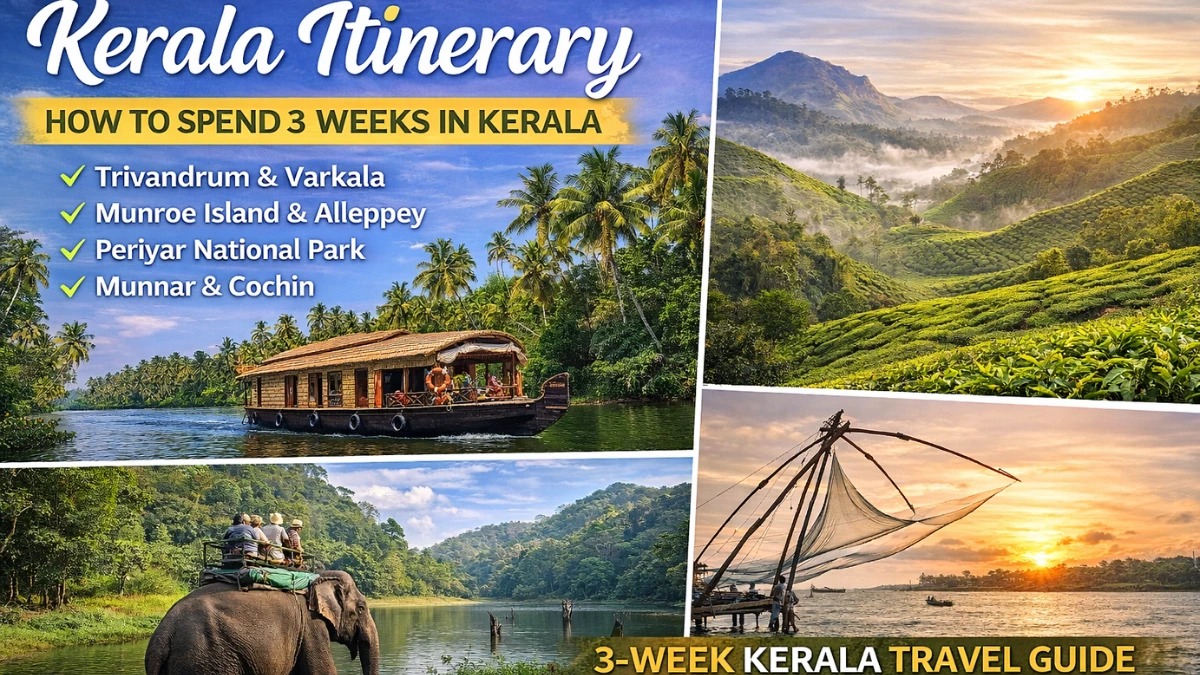
In this guide, I will walk you through a detailed 3 week Kerala itinerary to help you plan an unforgettable journey through one of India’s most beautiful states. Kerala, often referred to as God’s Own Country, is a small yet incredibly diverse state in South India. With its palm lined backwaters, serene beaches, rich wildlife, misty hill stations, and mouthwatering cuisine, Kerala truly feels like a slice of paradise.
Kerala also stands out as one of the most progressive states in India. It boasts the highest literacy rate and one of the longest life expectancies in the country. Because of this, traveling in Kerala feels calmer and more organized compared to many other parts of India. Cities and towns are generally cleaner, infrastructure is better, and the overall pace of life is more relaxed.
The people of Kerala take great pride in their culture, traditions, and natural surroundings. Its lush green landscapes, vibrant festivals, and ancient heritage have made it one of the most visited destinations in India. This Kerala itinerary will help you make the most of your time and experience the very best the state has to offer.
My Kerala itinerary
In this post, I share my own Kerala travel itinerary, which I created after extensive research on the best places to visit and things to do. It combines famous attractions such as the Kerala backwaters with lesser known destinations that offer a more authentic experience.
This itinerary covers 3 weeks in Kerala. I personally enjoy slow travel and prefer spending more time in each place rather than rushing. However, if you are short on time, this same Kerala itinerary can be adapted to fit into two weeks. On the other hand, Kerala has so much to explore that you could easily extend your stay beyond three weeks.
Kerala itinerary: 3 weeks in Kerala
Day 1: Trivandrum
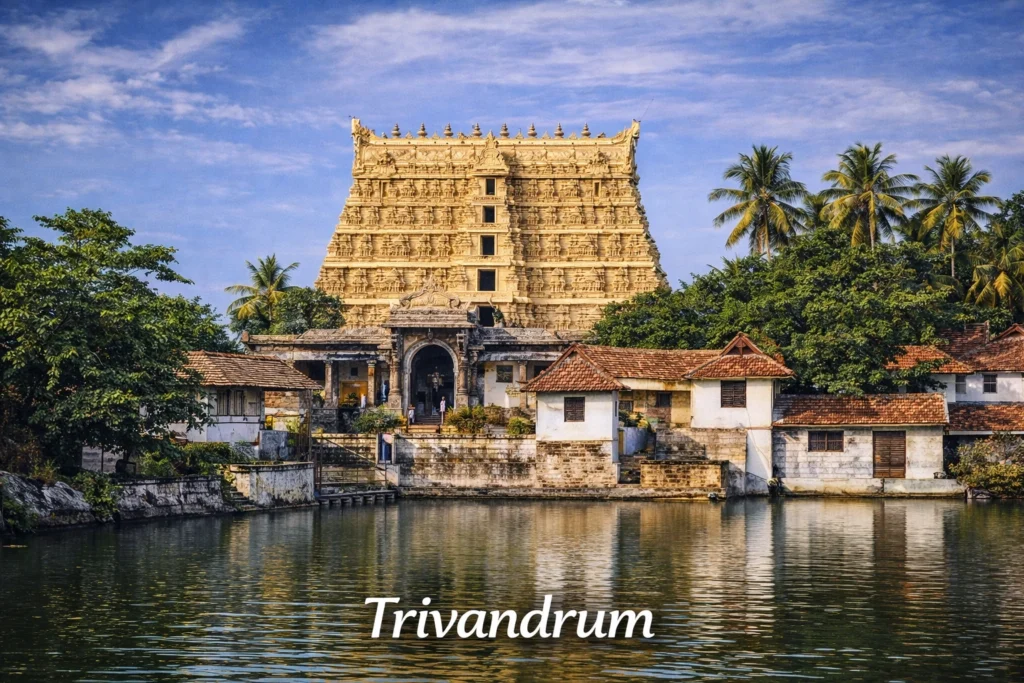
My Kerala itinerary begins in Trivandrum, officially known as Thiruvananthapuram, the capital city of Kerala. Trivandrum is a cultural hub with a strong heritage of classical dance, music, and theater. The city is home to important institutions that preserve traditional Indian art forms.
Trivandrum also has several historic Hindu temples. The most famous is the Sri Padmanabhaswamy Temple, considered one of the oldest and wealthiest temples in Kerala. Entry is restricted to Hindus only, but the stunning Dravidian style architecture can still be admired from outside.
One day in Trivandrum is enough to cover the main attractions and get a feel for the city.
Where to eat: The iconic Indian Coffee House in Trivandrum is well known for its unique architecture and affordable meals. It is a great place to try biryani and other classic Indian dishes.
Where to sleep: Instead of staying in Trivandrum, I recommend heading straight to nearby Varkala for a more scenic environment and better accommodation options. If you do stay in Trivandrum, La Casa Homestay and Mary Land Homestay are both friendly and comfortable choices.
Day 2 to 4: Varkala
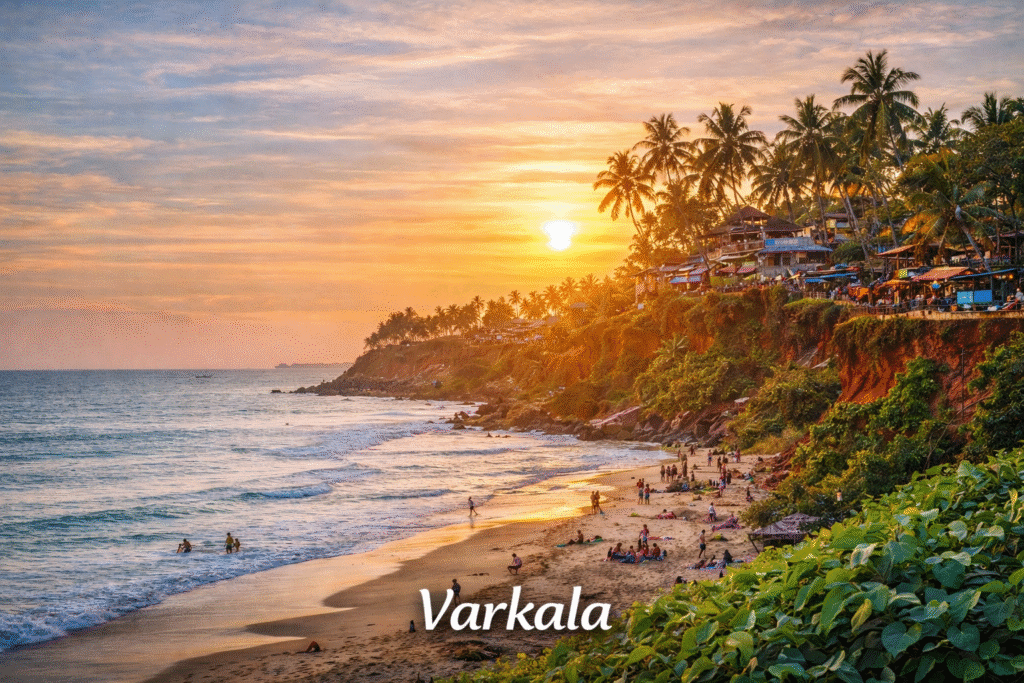
Kerala is blessed with a long coastline dotted with beautiful sandy beaches. Kovalam and Varkala are two of the most popular beach destinations. After visiting both, I found Varkala to be more appealing due to its relaxed atmosphere and backpacker friendly vibe.
Similar to Gokarna in Karnataka, Varkala is a small temple town and an important Hindu pilgrimage site. The Janardhana Swamy Temple, dating back to the 12th century, attracts devotees from across the country. Many pilgrims also come to Varkala Beach to perform last rites for their loved ones.
Varkala Beach holds deep religious significance, and near the entrance you can often see priests conducting traditional ceremonies. Behind the beach rises a dramatic red sandstone cliff that is lined with restaurants, cafes, guesthouses, and resorts.
While the main beach can get busy, there are several quieter beaches nearby that offer a more peaceful experience. These secluded beaches are surrounded by coconut palms, greenery, and calm backwaters, making them some of the most scenic spots in Kerala.
Varkala practicalities
How to get there: Varkala is well connected to Trivandrum by frequent buses and trains. The Varkala railway station also has connections to Kollam, Alleppey, and other major towns in Kerala.
Where to eat: Varkala is an excellent place to enjoy fresh seafood. Some of my favorite restaurants include Darjeeling Cafe and Gods Own Country Kitchen.
Where to sleep: Accommodation options in Varkala range from budget guesthouses and beach huts to luxury ayurvedic resorts. The cliff area is lively and convenient, while Black Beach and Odayam Beach are ideal for those seeking tranquility. I recommend The Barefoot for a comfortable stay at a reasonable price.
Day 5 to 7: Munroe Island
Munroe Island is slightly off the usual tourist trail, yet it is one of the most peaceful and beautiful destinations in Kerala. For me, it was a highlight of my entire trip and a perfect addition to this Kerala itinerary. If you want to experience the true charm of the Kerala backwaters, Munroe Island is hard to beat.
This region is made up of several small islands where the Kallada River meets Ashtamudi Lake. Exploring Munroe Island means navigating narrow canals lined with palm trees and traditional village homes. Staying at a local homestay allows you to explore coconut groves, spice gardens, rubber plantations, and lush green surroundings.
How to get there: From Varkala, take a bus to Kollam. From Kollam, you can either hire a taxi or take a local train to Munroe Island. The station is called Munroturuttu.
Where to sleep: I highly recommend Vijeesh’s Homestay. It offers not only comfortable accommodation but also a warm family atmosphere. Vijeesh is an excellent guide, and his mother prepares delicious homemade Kerala meals.
Day 7 to 9: Alleppey
Alleppey, often called the Venice of India, is the most famous destination for experiencing Kerala’s backwaters. After the calm waterways of Munroe Island, Alleppey felt much busier, but it still offers a unique experience.
Alleppey is the best place to stay on a traditional houseboat known as a kettuvallam. These boats, once used for transporting goods, have now been transformed into floating hotels. While houseboat stays can be expensive, there are more affordable ways to explore the canals.
I opted for a canoe tour, which allowed me to slowly drift through the waterways while observing daily life along the canals. Watching massive houseboats glide by was an impressive sight.
Beyond the backwaters, Alleppey has a pleasant beach and access to rural villages like Kuttanad. As a popular tourist hub, it also offers cooking classes, yoga sessions, and ayurvedic treatments.
Alleppey practicalities
How to get there: Alleppey is easily accessible by train and bus from most parts of Kerala. There is even a direct train from Munroe Island.
Where to sleep: I stayed at Alleppey 3 Palms Guesthouse. It is simple, affordable, and suitable for budget travelers.
Day 10: Alleppey to Kottayam ferry
Instead of traveling by road, I took the local ferry from Alleppey to Kottayam. This journey provided another completely different backwater experience and is one of the cheapest ways to explore Kerala’s waterways.
The ferry is mostly used by locals, giving you a glimpse into everyday life along the canals. The journey takes about two to three hours. Taking an early ferry allows enough time to continue onward to Thekkady by bus.
Day 11 to 13: Periyar National Park
Kerala is not only about beaches and backwaters. Its wildlife and forests are equally impressive. Periyar National Park, located in the Western Ghats near the Tamil Nadu border, is one of the most important wildlife reserves in South India.
Although sightings of tigers and elephants are rare, visitors often spot animals such as Indian bison, wild boars, squirrels, and various monkey species.
The town of Thekkady serves as the entry point to the park. All activities must be booked through the park authorities, and a guide is mandatory. Options include nature walks, boat safaris, jeep safaris, and bamboo rafting.
The boat safari on Periyar Lake is the most popular and affordable option. During my visit, I saw several animals along the shoreline, making it a worthwhile experience.
How to get there: Thekkady does not have a railway station but is well connected by bus to Alleppey, Munnar, and Madurai.
Where to stay: There are many cozy homestays in Thekkady. Spice Cottage Homestay and Forest View Homestay are both excellent options.
Day 14 to 16: Munnar
Munnar is located in the Western Ghats and sits at an elevation of about 1600 meters. Surrounded by rolling hills, tea plantations, and misty valleys, it offers a refreshing change from the coastal regions.
Originally developed as a hill station during British rule, Munnar still retains colonial charm. The lush tea estates, first established by a Scottish planter, now define the landscape.
Munnar’s beauty lies outside the town itself. Due to limited public transport, most sightseeing is done through organized tours. Popular activities include visiting tea estates, trekking, cycling, and trips to nearby wildlife areas.
Munnar practicalities
How to get there: Munnar is accessible by bus from Thekkady and Kochi. The road journey is incredibly scenic.
Where to sleep: Choosing the right accommodation is important in Munnar. Staying outside town offers peace and views, while staying in town provides convenience. Good options include Green Tea View, Thoppil Homestay, Green Valley Vista, and Greenview Holiday Inn.
Day 17 to 20: Cochin
Cochin, also known as Kochi, has a fascinating colonial history. Fort Kochi began as a fishing village before being shaped by Portuguese, Dutch, and British influences.
Today, Cochin is the commercial capital of Kerala and an important spice trading center. The modern area of Ernakulam contrasts sharply with the historic charm of Fort Kochi across the water.
Fort Kochi feels more like a village than a city, with quiet streets, colorful colonial buildings, churches, palaces, and forts. It was a refreshing change after visiting busier cities and a perfect place to end this Kerala itinerary.
Cochin practicalities
How to get there: Cochin is well connected by train and bus. From Ernakulam, ferries run frequently to Fort Kochi.
Where to sleep: Fort Kochi has excellent accommodation options. I stayed at Mother Tree B and B and had a wonderful experience. Other good homestays include Kevin Homestay and Aaron’s Homestay.
Kerala itinerary extensions
If you have more than three weeks, extending your Kerala trip is easy. You can spend extra time in your favorite destinations or explore nearby states.
From Periyar, a day trip to Madurai to visit the Meenakshi Temple is possible. In southern Kerala, Kovalam Beach and Kanyakumari are also worth visiting.
Another great option is combining Kerala with Karnataka, which offers ancient temples, wildlife sanctuaries, and beautiful beaches.
Sustainable travel in Kerala
Kerala’s natural beauty needs protection, and sustainable travel plays an important role. Supporting local communities by shopping at local markets and eating regional food helps the local economy.
Staying in homestays and locally owned guesthouses is a great way to travel responsibly. Kerala has many community based tourism initiatives that offer authentic experiences.
Using public transport, reducing plastic waste, conserving water and electricity, and respecting local customs all contribute to responsible travel. Dressing modestly, learning a few Malayalam phrases, and asking permission before taking photos help build positive interactions.